Bingu Display Font for Handmade Creators
As a maker who designs printable wall art, hand-stamped tags, wedding stationery, and Cricut-cut stickers, I’m always hunting for display fonts that do more than just look pretty—they need to work. Bingu is one of those rare typefaces that delivers both charm and commercial practicality. It’s not overly ornate, not too minimal—it strikes that sweet spot where personality meets precision.
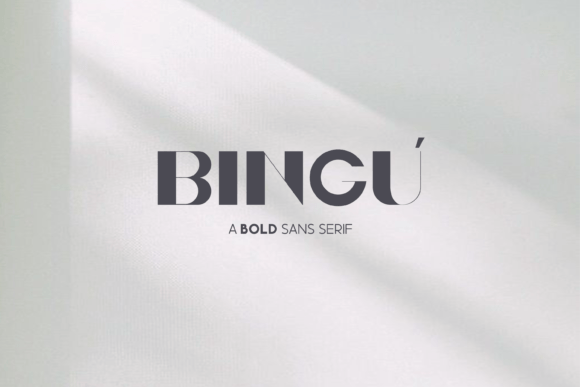
Bingu has a relaxed yet confident presence: soft curves, balanced spacing, and subtle contrast between thick and thin strokes. It feels modern but warm—like handwritten lettering refined through thoughtful design. There’s no aggressive sharpness or distracting flourishes, which means it holds up beautifully at small sizes (think 12–16 pt on product labels) and commands attention at large scales (200+ pt on farmhouse-style signs or acrylic welcome boards). That versatility is why I reach for Bingu first when designing for physical products.
Where Bingu Shines in Real Craft Projects
I’ve used Bingu across dozens of tangible items—and each time, it reinforced how well it bridges aesthetic appeal with production readiness:
- Candle and soap labels: Printed on kraft sticker paper, Bingu reads clearly even with subtle ink bleed. Its open letterforms prevent clogging in thermal label printers and hold up cleanly when die-cut on a Silhouette Cameo.
- Wedding welcome signs & escort cards: Paired with a light serif like Playfair Display for body text, Bingu adds approachable elegance without competing for attention. Guests notice the warmth—not the font name.
- Digital printables: Planner covers, habit trackers, and quote-based wall art all benefit from Bingu’s generous x-height and consistent rhythm. On screen and in PDF previews, it renders crisply—even on lower-resolution mockups.
- Tote bags and mugs: When converted to vector paths (SVG or DXF), Bingu’s clean outlines cut smoothly on heat-transfer vinyl and sublimate evenly on ceramic. No broken joins or unintended overlaps.
- Seasonal packaging: From holiday cookie boxes to spring farmers’ market tags, Bingu gives seasonal designs cohesion. Its neutral-but-charming tone avoids looking dated or overly trendy.
Readability & Production Notes You’ll Actually Use
Let’s talk real-world readability: Bingu isn’t built for paragraphs—but it’s excellent for short, high-impact phrases. Names, titles, taglines, and single-line quotes? Perfect. For example, “Est. 2023” on a boutique clothing tag, “Honey Lavender” on an apothecary label, or “You’re Invited” centered on a foil-stamped invitation—all land with clarity and quiet confidence.
If you’re cutting Bingu with a Cricut or Silhouette, keep these tips in mind:
- Use the OTF version for best vector fidelity—especially if your design software supports OpenType features.
- Avoid scaling below 8 pt for physical stickers under 1” wide; test print a sample before bulk runs.
- For dark backgrounds (like navy gift wrap or black chalkboard signs), increase letter spacing by 20–30 units in your design app—Bingu’s natural spacing tightens slightly on rich tones.
- When exporting SVGs for cutting machines, outline text *before* saving. Bingu’s clean geometry converts reliably, with no stray nodes or hidden layers.
Smart Pairings That Elevate Your Brand
Bingu plays well with others—especially when you’re building a cohesive brand identity. Here’s what works consistently in my shop:
- With a friendly sans serif: Pair Bingu with Montserrat or Poppins for digital templates, social media graphics, or printable bundle covers. The contrast gives structure without stiffness.
- With a delicate script: Try Bingu as the headline over a light, connected script (like Adorn or Delicate Script) for wedding suites. Bingu grounds the design; the script adds movement.
- With a classic serif: For vintage-inspired apothecary labels or bookstore-themed planner pages, layer Bingu over Lora or Crimson Text. The blend feels intentional—not accidental.
What makes Bingu especially valuable is how little it asks in return: no steep learning curve, no complex alternates to manage, and no need to hunt for stylistic sets. It ships as a clean, ready-to-use display font—no extra installation steps, no missing glyphs. While it doesn’t include extended multilingual characters or extensive swashes, its core character set covers English, Western European languages, and common punctuation needed for most craft businesses.
Licensing That Supports Your Small Business
If you sell physical goods, digital downloads, or client-designed assets, confirm your license includes commercial use—specifically for merchandise, templates, SVG files, and print-on-demand items. Bingu’s standard commercial license covers all of those. That means you can embed it in Canva templates, include it in SVG bundles for Etsy, or use it on t-shirts sold via Printful—without worrying about compliance gaps. Just remember: you’re licensing usage rights, not ownership. Never redistribute the font file itself.
For me, Bingu isn’t just another download—it’s become part of my product DNA. It quietly lifts the perceived quality of every item it touches. A candle label with Bingu feels more considered. An invitation with Bingu feels more personal. A printable quote with Bingu feels more shareable. That’s the power of a thoughtfully designed display font: it doesn’t shout, but it stays remembered.